Stroke rehabilitation at home: a guide for families
After discharge, most stroke recovery happens at home and is supervised by family. What helps, what to expect month by month, and how to look after the carer too.
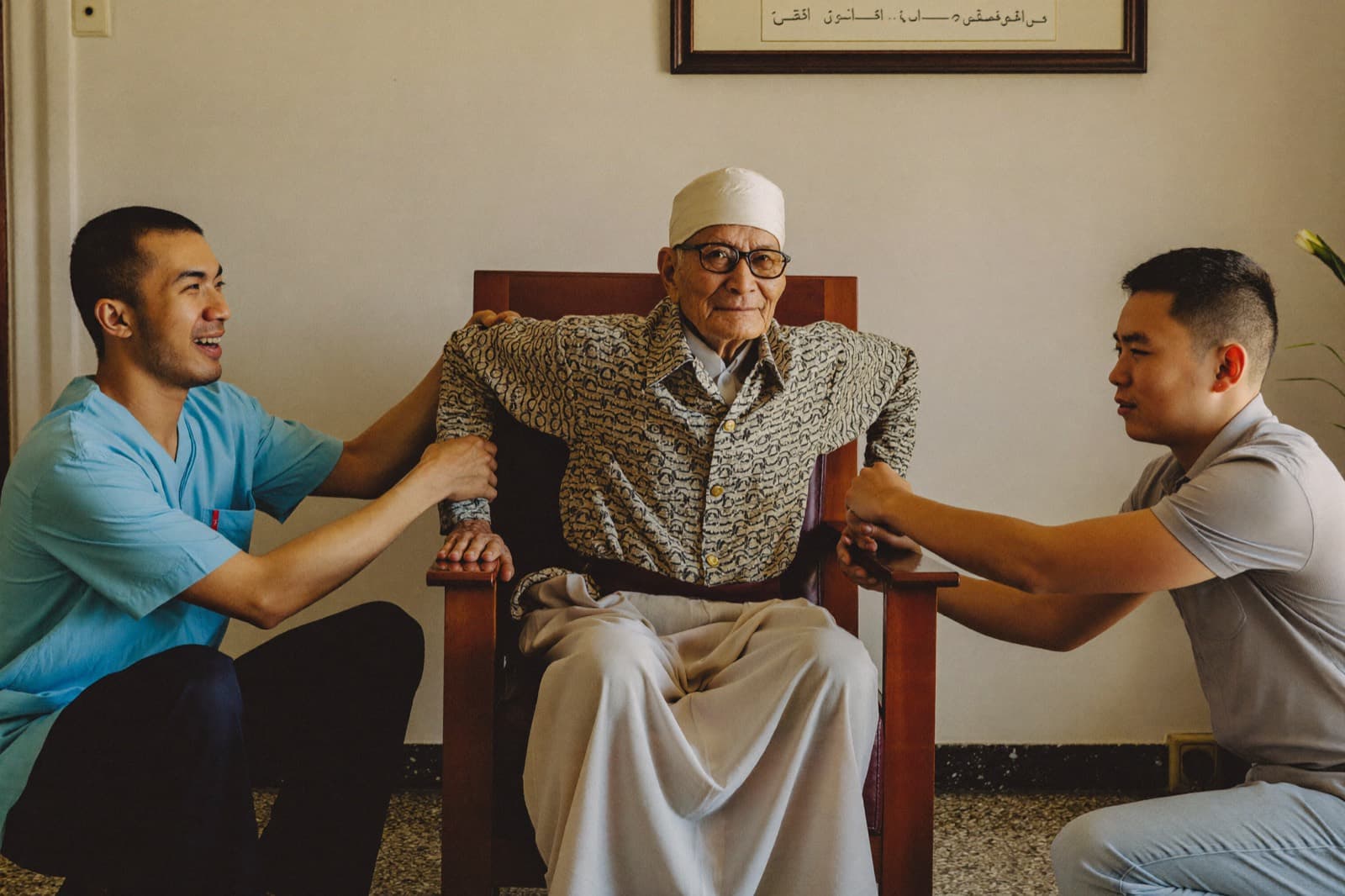
A stroke discharge is disorienting. In hospital there were nurses, therapists and a schedule. At home there is a family, a list of exercises, and the sudden understanding that recovery is now largely your responsibility.
The encouraging part: what happens at home matters enormously. Recovery after a stroke depends heavily on repetition of purposeful movement, and the home is where the repetitions are available.
What is actually happening
Stroke damages part of the brain. The surrounding networks can reorganise (neuroplasticity), but the reorganisation is driven by use. The brain strengthens what is practised, and lets go of what is not.
Three practical consequences follow:
- Frequency beats intensity. Short, frequent practice through the day beats one long session.
- Specificity matters. The brain learns the task you practise. Practising standing improves standing. If the goal is getting out of a chair, practise getting out of that chair.
- Difficulty must be calibrated. Too easy produces no adaptation; too hard produces failure and compensation. The right level is effortful but achievable, and it keeps moving.
The first three months
This is the period of fastest change, though meaningful recovery continues well beyond it.
Priorities at home:
- Positioning. Correct positioning in bed and in a chair protects the affected shoulder, which is vulnerable to subluxation and pain. A physiotherapist should demonstrate this in your own furniture.
- Transfers. Bed to chair, chair to standing, on and off the toilet. These are the movements that determine whether someone can be cared for at home at all.
- Using the affected side. The natural instinct is to do everything with the strong side. Over weeks this teaches the brain to abandon the weak side: learned non-use. Structured tasks that require the affected limb counteract it.
- Sitting and standing balance. The foundation for everything else.
- Walking practice, where safe and appropriate, with the aid prescribed.
What families consistently get wrong: helping too much. It is uncomfortable to watch someone struggle for ninety seconds with a shirt sleeve. But that struggle is the therapy. Help with what is genuinely unsafe; wait through what is merely slow.
Months three to twelve
Progress slows and becomes less visible day to day, which is when families lose heart. Recovery has not stopped; it has changed pace and moved from gross movement to refinement, endurance, and complexity.
Focus shifts to:
- Walking further, on varied surfaces, and outdoors
- Finer hand and arm function integrated into daily tasks
- Stamina, which is often the limiting factor long before strength is
- Returning to roles: cooking, prayer, work, driving where medically cleared
- Confidence, which erodes quietly after a fall or a near-fall
Keep a record. Video a transfer or a walk once a month. Month-to-month footage shows progress that daily observation completely misses, and it sustains morale in both directions.
Making the house work
Practical changes with disproportionate effect:
- Clear the floor. Loose rugs, cables and clutter cause falls.
- Lighting, particularly on the route between bed and bathroom at night.
- Grab rails by the toilet and in the bathroom, fitted into something structural.
- Chair height. A low, soft sofa is one of the hardest surfaces to rise from. A firm chair of correct height with arms transforms independence.
- Bathroom safety: non-slip mat, shower chair, handheld shower head.
- Keep essentials within reach on the accessible side.
A home physiotherapist should walk the route the patient actually uses and point out what to change. This assessment is difficult to do properly from a clinic.
The exercises are not the whole programme
Families often treat the prescribed exercises as the therapy and everything else as ordinary life. Reversing that view is more effective. Meals, dressing, bathing and moving around the house are dozens of daily repetitions of exactly the movements being rehabilitated. Turning routine into practice, with the affected side involved, unhurried, and supervised instead of substituted, multiplies the therapy hours enormously.
Watch for the things that are not movement
Stroke affects more than limbs, and the non-motor effects are often the ones that stall recovery:
- Fatigue: profound, not proportional to activity, and frequently underestimated by everyone except the patient
- Low mood and anxiety: common after stroke and treatable; raise it with the doctor rather than absorbing it as inevitable
- Communication difficulties: aphasia needs speech therapy input, and needs patience from everyone else
- Swallowing problems: must be assessed; unsafe swallowing is dangerous
- Cognitive and attention changes: including neglect of one side of space, which affects safety directly
Report these to the medical team. They are part of the picture, not a separate complaint.
Look after the carer
The person doing the caring is at real risk of exhaustion, injury and burnout, and their collapse ends the home programme faster than anything else.
- Learn safe handling technique properly: carer back injuries are common and preventable
- Share the load across the family, on a schedule, not ad hoc
- Arrange respite before it becomes urgent
- Accept that frustration and grief are normal responses, not failures of character
What to expect, honestly
Some people recover close to their previous function. Many recover substantially but not completely. A few remain heavily dependent. Which path applies depends on the stroke's location and size, the person's age and health, how quickly treatment was received, and how consistently rehabilitation is done.
What is within your control is the consistency, the environment, and the quality of supervision. Those are not small factors, and unlike the stroke itself, they are decided at home, every day.
If you are unsure whether something is safe, ask before trying it. A single fall can undo months.
This article is general information about physiotherapy and recovery, not a diagnosis or a treatment plan. Always consult a registered physiotherapist or doctor about your own condition.