Home visits or clinic physiotherapy: which one suits your condition
Home physiotherapy is not simply a convenient version of clinic care. Each setting is genuinely better for different conditions: here is how to tell which one you need.
The convenience argument for home physiotherapy is obvious and slightly beside the point. Skipping traffic is nice. The more interesting question is clinical: for your particular condition, does treatment work better in your house or in a clinic?
The honest answer is that it depends, and the deciding factor is usually whether your recovery depends on equipment or on environment.
What a clinic gives you that a home cannot
Clinics exist for good reasons.
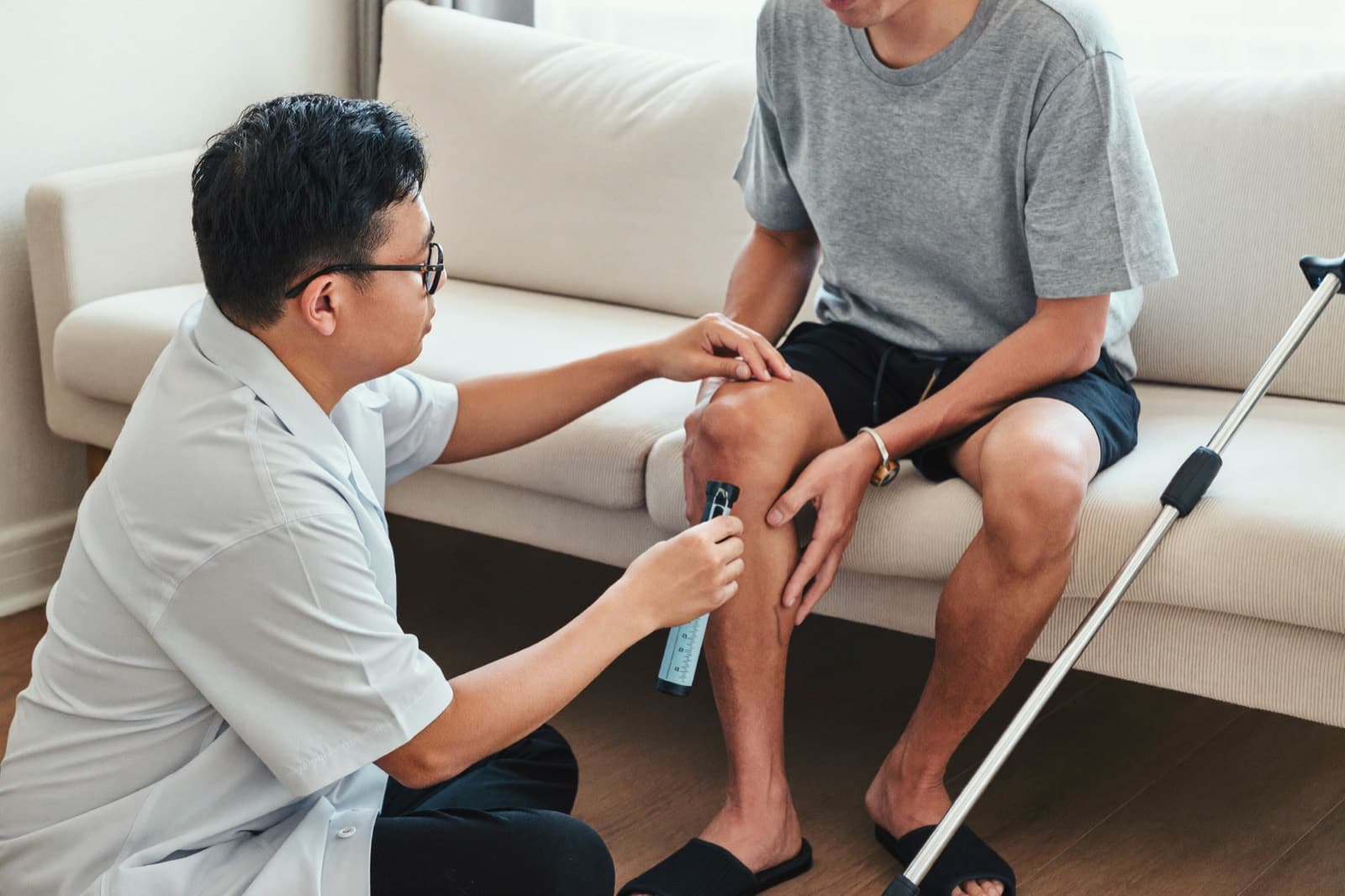
Heavy and fixed equipment. Traction tables, isokinetic dynamometers, anti-gravity treadmills, larger resistance rigs, hydrotherapy pools. If your rehabilitation genuinely requires progressive loading beyond what portable equipment and bodyweight can supply (late-stage ACL reconstruction, return-to-sport testing, serious strength deficits), a clinic is the right place.
Space. Sprint mechanics, agility drills and gait retraining over distance need a corridor longer than most living rooms.
Multiple practitioners. Complex cases sometimes benefit from a second opinion in the next room, or from coordinated care with a sports physician or an occupational therapist.
A neutral setting. Some patients focus better away from the household. Being at home with children, work and a doorbell is not always conducive to an hour of concentrated effort.
What a home gives you that a clinic cannot
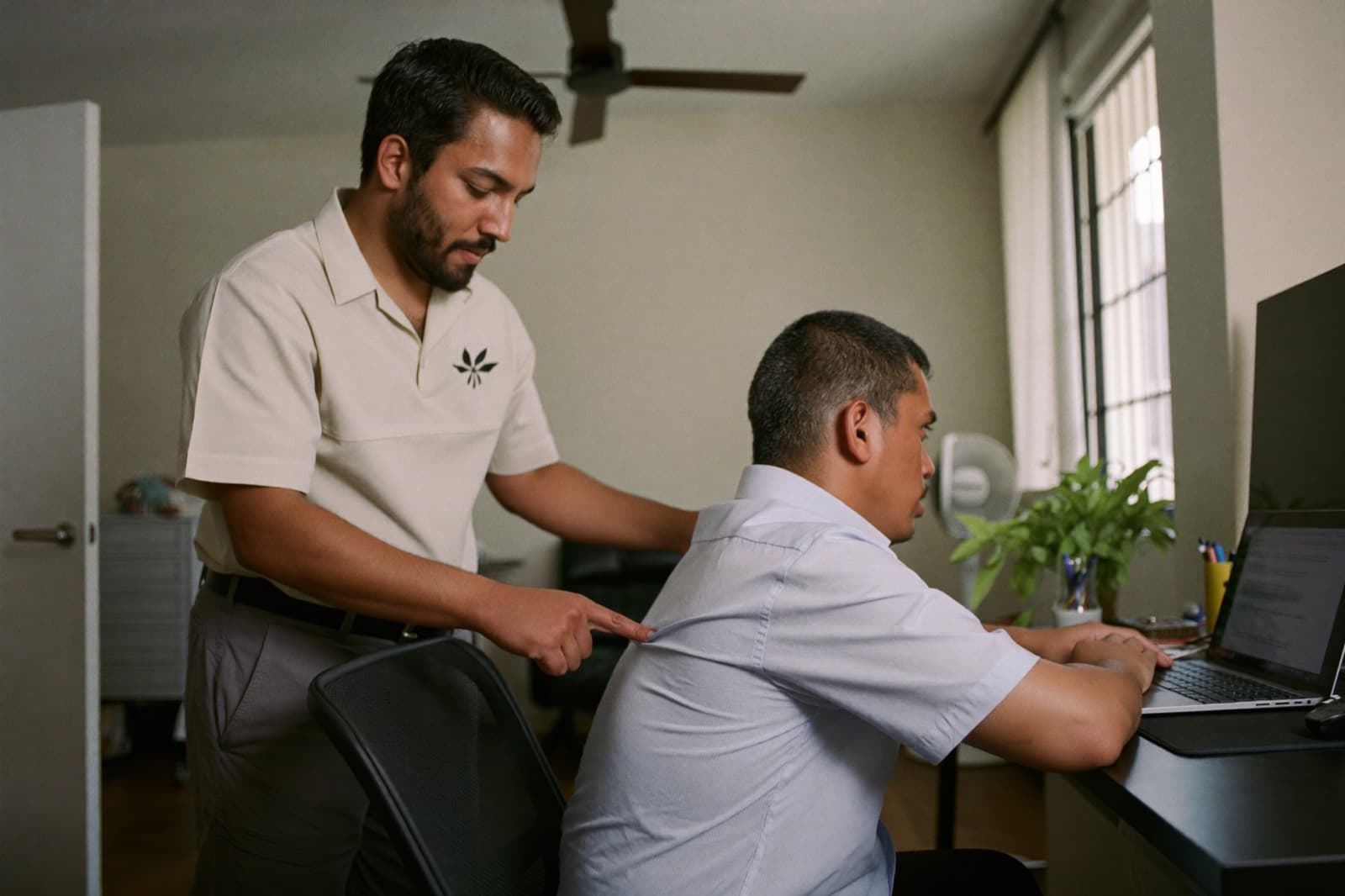
The actual environment. This is the significant one. Most chronic musculoskeletal problems are maintained by daily conditions: the chair you sit in for nine hours, the height of your bed, the stairs you climb twenty times a day, the way your kitchen counter forces you to reach. A clinic physiotherapist can ask about these. A home physiotherapist can stand in front of them, measure them, and change them.
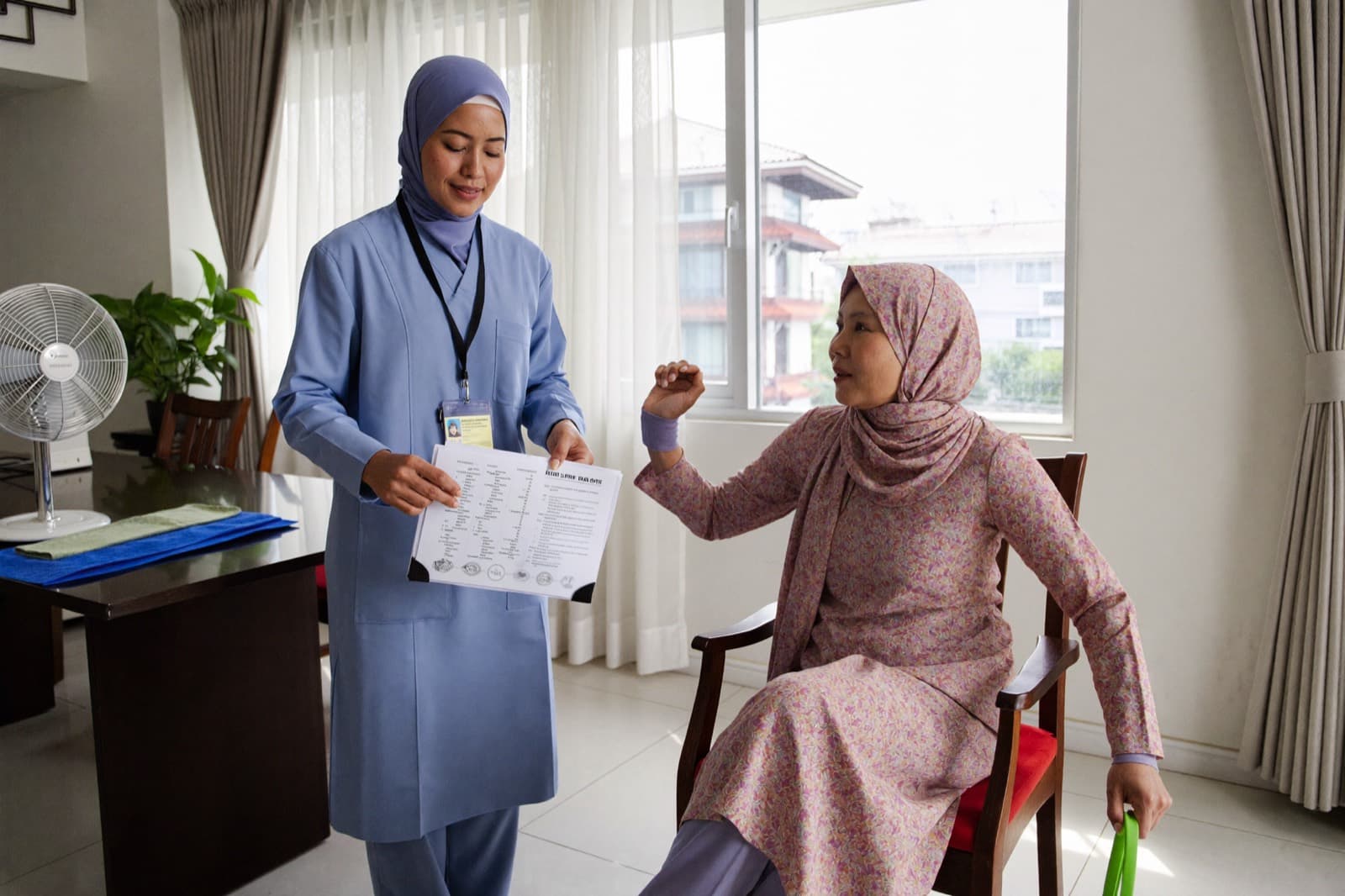
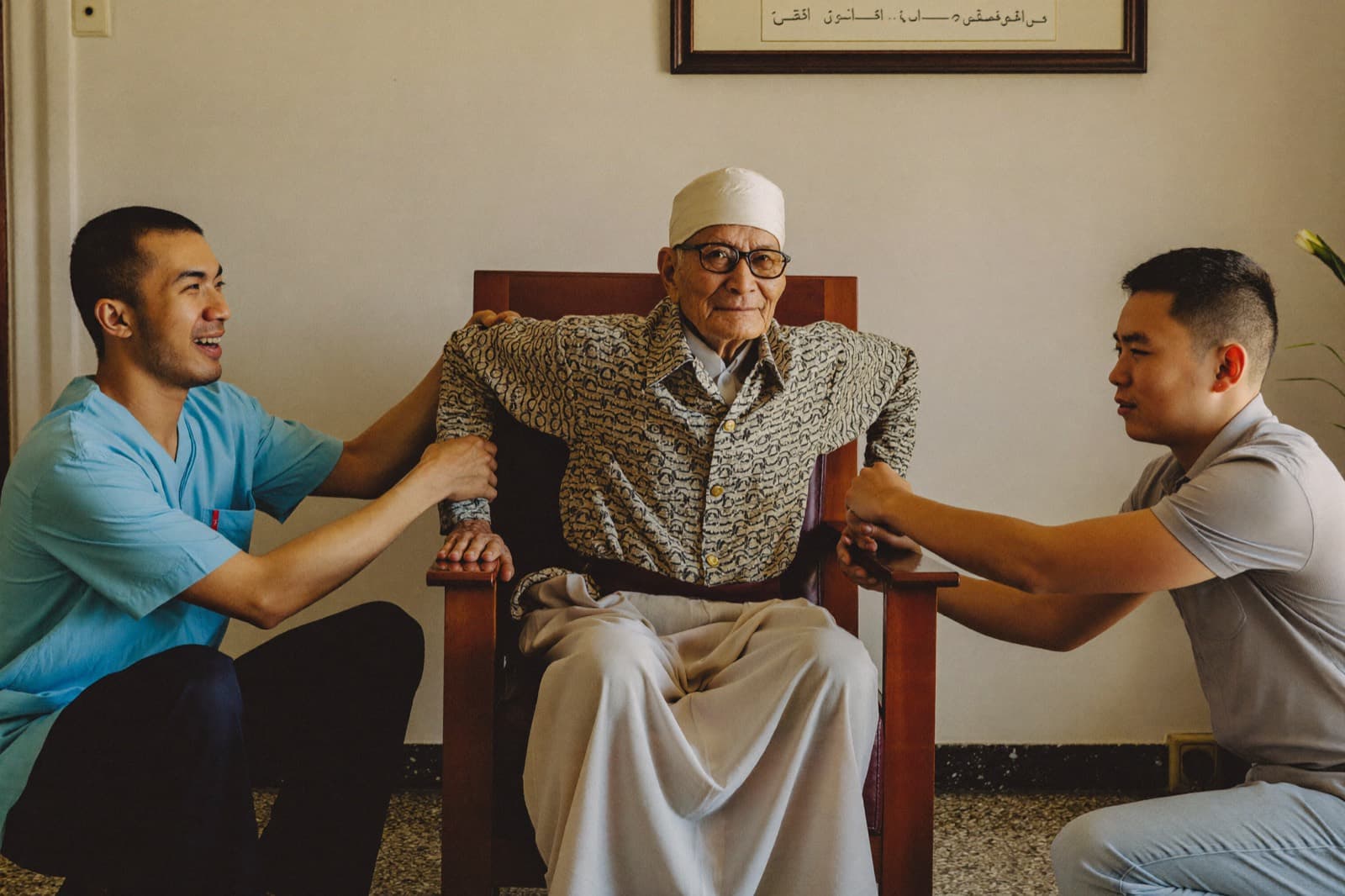
Task-specific practice. Rehabilitation transfers best when it is practised in context. Learning to get out of your own bed, negotiate your own bathroom, or manage your own front step is not the same as practising a generic version. For elderly patients and neurological rehabilitation, this is often the difference between progress and plateau.
Family involvement. The carer who supervises exercises for the rest of the week is at home, not in the clinic. Teaching them directly, showing how to guide a transfer and how to spot a compensation pattern, has an outsized effect on outcomes.
Continuity for people who would otherwise stop. The strongest argument for home visits is the sessions that would not have happened at all. Missed appointments are the largest hidden cost in rehabilitation, and travel is the leading cause.
A rough guide by condition
| Situation | Usually better at home | Usually better in clinic |
|---|---|---|
| Early post-surgical (knee, hip, shoulder) | ✓ First few weeks | Later strengthening phases |
| Stroke and neurological rehabilitation | ✓ Task practice in real environment | Specialist gait or robotic equipment |
| Elderly, falls risk, frailty | ✓ Almost always | Rarely |
| Low back and neck pain | ✓ If desk or sleep setup is a factor | If traction or gym loading is needed |
| Sports injury, return to play | Early stages | ✓ Testing and late-stage loading |
| Post-natal recovery | ✓ Practical and private | If specialist equipment is required |
| Respiratory physiotherapy | ✓ Often | Hospital-based where acute |
| Paediatric development | ✓ Play in familiar surroundings | Specialist assessment |
The pattern most people end up with
In practice, the two settings are not rivals. A common and sensible arc looks like this:
- Weeks 0-4 at home. Post-operative or acute stage. Mobility is limited, travel is genuinely difficult, and the priorities are protection, range of motion, swelling control, and adapting the house so you can function safely.
- Weeks 4-10, mixed. As mobility returns, sessions requiring more load move to a clinic while home visits handle progression and troubleshooting.
- Later, clinic or independent. Strength work at higher loads, sport-specific drills, or simply a gym programme you run yourself with periodic review.
Handled well, the transition is planned rather than accidental, and your physiotherapist should be the one telling you when the setting should change.
Questions worth asking before you book
- Can this condition be treated effectively without fixed equipment? For the majority of common presentations, yes.
- Is my problem partly caused by my environment? If so, someone should see that environment.
- How reliably can I travel? Be realistic. Three home sessions completed beat six clinic sessions booked and missed.
- Who else needs to be taught? If a family member will supervise your exercises, teach them where they are.
- Do I need a diagnosis first? If there has been trauma, unexplained weakness, numbness, or you have not been assessed by a doctor for a serious injury, get medical assessment before booking any physiotherapy.
When home physiotherapy is not appropriate
Home visits are not the right call when:
- You have red-flag symptoms needing medical assessment: sudden severe weakness, loss of bladder or bowel control, unexplained weight loss, fever with back pain, or chest pain
- You are acutely unwell and need hospital-level monitoring
- Your rehabilitation is at a stage that genuinely requires heavy equipment
- Your home cannot be made safe for treatment even after adjustment
A competent physiotherapist will tell you if any of these apply, and will refer you on rather than treat.
The bottom line
Choose the clinic when your recovery depends on equipment or space. Choose home when your recovery depends on your daily environment, when travel is a real barrier, or when the people around you need to learn what to do. For a lot of Malaysians (post-surgical patients, elderly parents, desk workers with stubborn back pain) that points home more often than the current system reflects.
This article is general information about physiotherapy and recovery, not a diagnosis or a treatment plan. Always consult a registered physiotherapist or doctor about your own condition.